carry tradeBank of Japanexchange ratesvolatilityliquidity
The Yen Carry Trade Unwind: How a Central Bank Shift Sparked a Global Market Shock
A detailed analysis of the August 5, 2024 global market panic, exploring the mechanics of the yen carry trade, the Bank of Japan's rate hike, and the transmission channels of leverage.
Convexity Core Research3 min read
On August 5, 2024, global financial markets experienced one of the most violent volatility spikes in decades. Japan's benchmark Nikkei 225 stock index collapsed by 12.4% in a single day—its largest one-day point drop in history and the worst percentage decline since the "Black Monday" crash of 1987. Within hours, the panic traveled across European and US markets, with the VIX volatility index surging to intraday highs not seen since the peak of the 2020 pandemic.
While early commentators blamed the move on a weak US employment report, the underlying catalyst was structural: the rapid unwinding of the global Yen Carry Trade.
Anatomy of the Carry Trade
The yen carry trade has been a cornerstone of global finance for nearly a quarter of a century. Driven by the Bank of Japan's (BOJ) persistent negative interest rate policy (NIRP) and yield curve control (YCC), investors could borrow Japanese yen at negligible interest rates.
Once borrowed, the yen was converted into foreign currencies (primarily US dollars) and invested in higher-yielding assets elsewhere. These assets included US Treasury bills, high-yielding emerging market debt, and highly liquid US technology stocks. As long as the yen remained weak and interest-rate differentials stayed wide, the trade was highly profitable and attracted massive leverage.
The Double Shock of July-August 2024
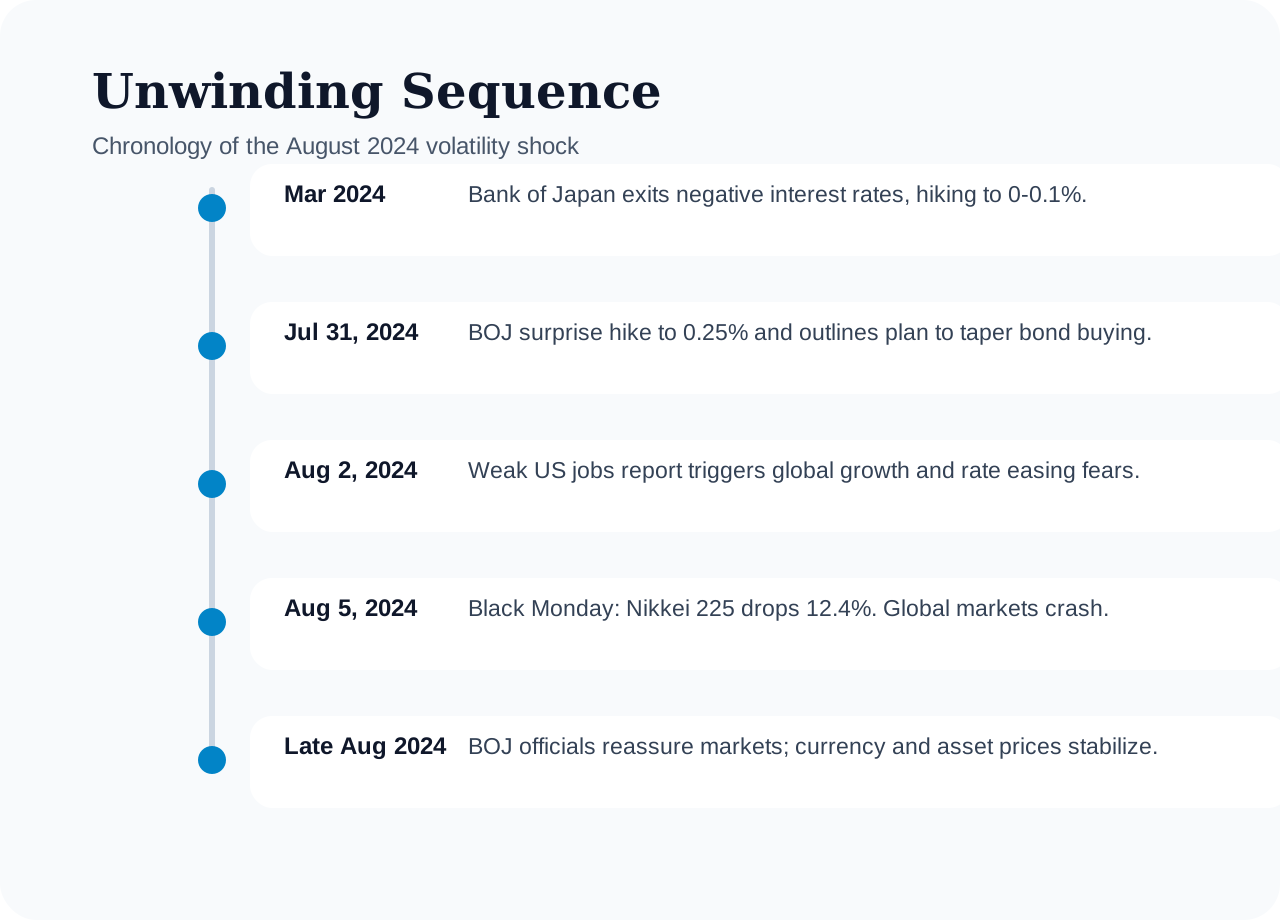
The trade depended on two key assumptions: that the BOJ would remain extremely accommodative, and that global asset markets would stay stable. Both assumptions failed in a span of five days.
Visual
Chronology of the August 2024 carry trade panic
How monetary decisions in Tokyo combined with labor data in Washington to trigger a global selloff.
First, on July 31, 2024, the BOJ surprised markets by raising its policy rate to 0.25% and announcing a tapering of its government bond purchases. Second, on August 2, the US reported a weaker-than-expected payrolls print, triggering fears of a US slowdown and leading markets to price in aggressive rate cuts by the Federal Reserve.
The Mechanics of the Unwind
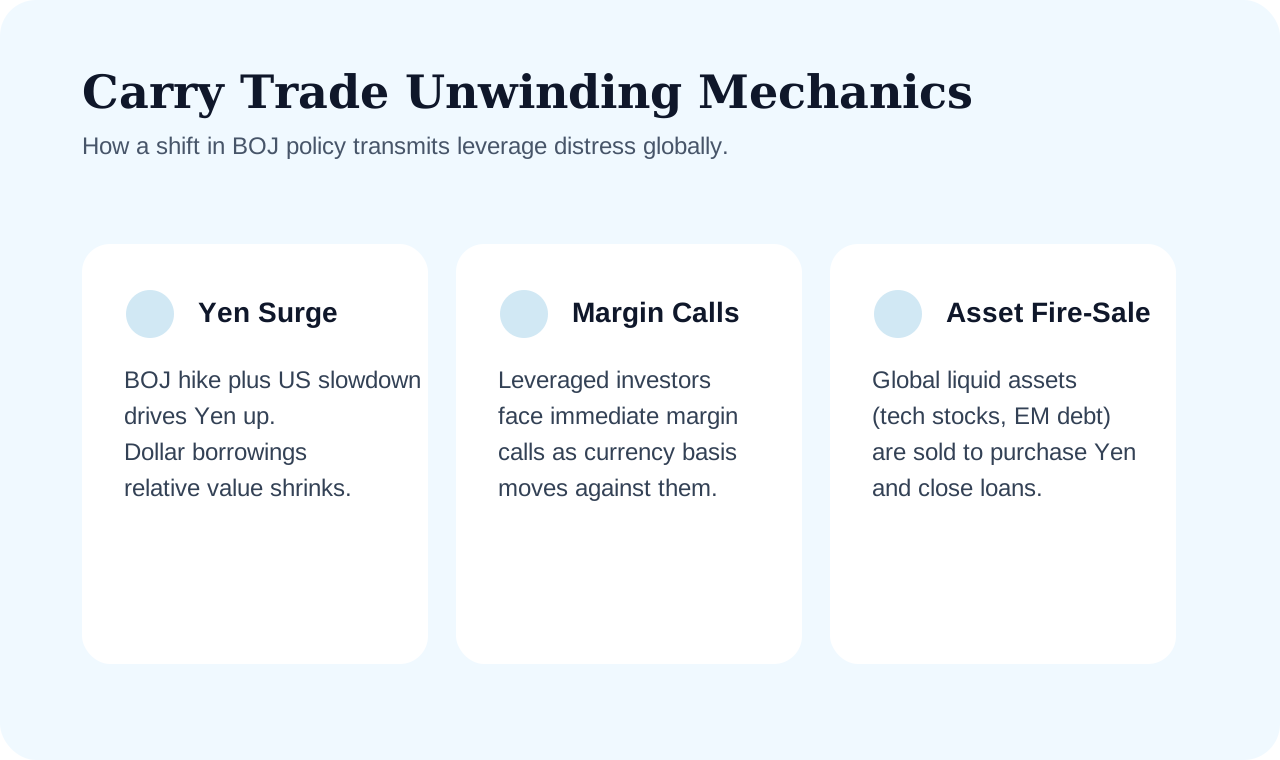
As the interest-rate differential between the US and Japan compressed, the yen began to appreciate rapidly against the dollar. This appreciation immediately turned the carry trade against leveraged participants.
Visual
The mechanical loop of a leveraged carry trade unwind
Currency appreciation triggers margin calls, which forces asset liquidations, reinforcing the cycle.
Because carry positions were heavily leveraged, even a minor move in the exchange rate could wipe out capital. As the yen strengthened:
Borrowers had to purchase yen to pay back their cheap loans, driving the yen even higher.
Brokers issued margin calls, forcing investors to liquidate their global asset holdings to raise cash.
Liquid assets—such as US mega-cap tech stocks—were sold off first to meet these liquidity needs, causing global equity markets to drop.
Visualization of the Shock
The correlation between the rapid appreciation of the Yen and the collapse of Japanese equities highlights the speed of the transmission mechanism.
Chart
Yen Appreciation vs Nikkei 225 Collapse (Jul - Aug 2024)
The rapid strengthening of the Yen (falling USD/JPY) occurred in lockstep with the liquidation of Japanese equities.
USD/JPY Exchange Rate IndexNikkei 225 Stock Index
X-axis: Trading Days (Jul 25 - Aug 10, 2024)Y-axis: Index (Pre-shock = 100)
Systemic Lessons for Investors
The August 2024 shock offered several critical lessons on systemic risk:
Leverage Hides in Funding: Risk is not just a function of the assets a portfolio holds, but how those assets are funded. A low-volatility asset can become highly volatile if its funding currency surges.
Crowded Trades Dissolve Instantly: When a trade is heavily populated by leveraged institutions, the exit door is structurally too small. Price-insensitive selling occurs as systems trigger automated liquidation rules.
Monetary Policy Spillovers are Global: In an interconnected world, a minor rate change by a central bank in one country can trigger forced selling of equities in another.
Table
Yen Carry Trade Shock: Core Statistics
Key market metrics showing the intensity and recovery of the volatility event.
Metric
Pre-Event Average
Peak Stress (Aug 5)
Post-Event (Aug 15)
Net Change
USD/JPY Exchange Rate
158.50
141.70
148.90
-6.06%
Nikkei 225 Index
39,100
31,458
36,720
-6.08%
VIX Volatility Index
13.5
65.7 (Intraday)
15.2
+12.6%
US 10-Year Yield (%)
4.25
3.67
3.89
-36 bps
The carry trade unwind was a classic liquidity event rather than a credit crisis. However, it demonstrated the persistent vulnerability of modern, leverage-driven market structures. As central banks normalize their policies, investors must look beyond traditional credit risk to analyze funding vulnerabilities and crowded position dynamics.
An in-depth case study analyzing the post-pandemic inflation surge, the Federal Reserve's fastest rate-hiking cycle in decades, and the structural shifts in global fixed-income markets.
A detailed case study of the 2022 UK gilt crisis, showing how leveraged LDI structures, collateral calls, and policy intervention interacted during one of the sharpest sovereign rate shocks in recent years.