The Great Inflation and Aggressive Tightening: Lessons from the 2022-2024 Global Rate Shock
An in-depth case study analyzing the post-pandemic inflation surge, the Federal Reserve's fastest rate-hiking cycle in decades, and the structural shifts in global fixed-income markets.
Convexity Core Research3 min read
The 2022-2024 global monetary tightening cycle represents a historic paradigm shift in fixed-income markets. Following a decade of ultra-low rates and post-pandemic quantitative easing, central banks were forced to react to a sudden, persistent surge in inflation. What followed was the fastest and most aggressive series of interest rate increases in forty years, fundamentally reshaping pricing, risk management, and portfolio construction.
The catalyst was a combination of severe supply-chain bottlenecks, massive fiscal stimulus, and labor shortages. Central banks initially dismissed the inflation as "transitory," but by late 2021, the trajectory made it clear that structural changes were underway. The Federal Reserve, alongside its global peers, pivoted rapidly from forward-guidance accommodation to aggressive policy tightening.
The Velocity of the Hikes
Unlike typical tightening cycles, which proceed in gradual, predictable 25 basis point increments, the 2022 cycle was characterized by raw speed. In a bid to restore credibility and anchor inflation expectations, the Federal Reserve delivered multiple jumbo hikes of 75 basis points.
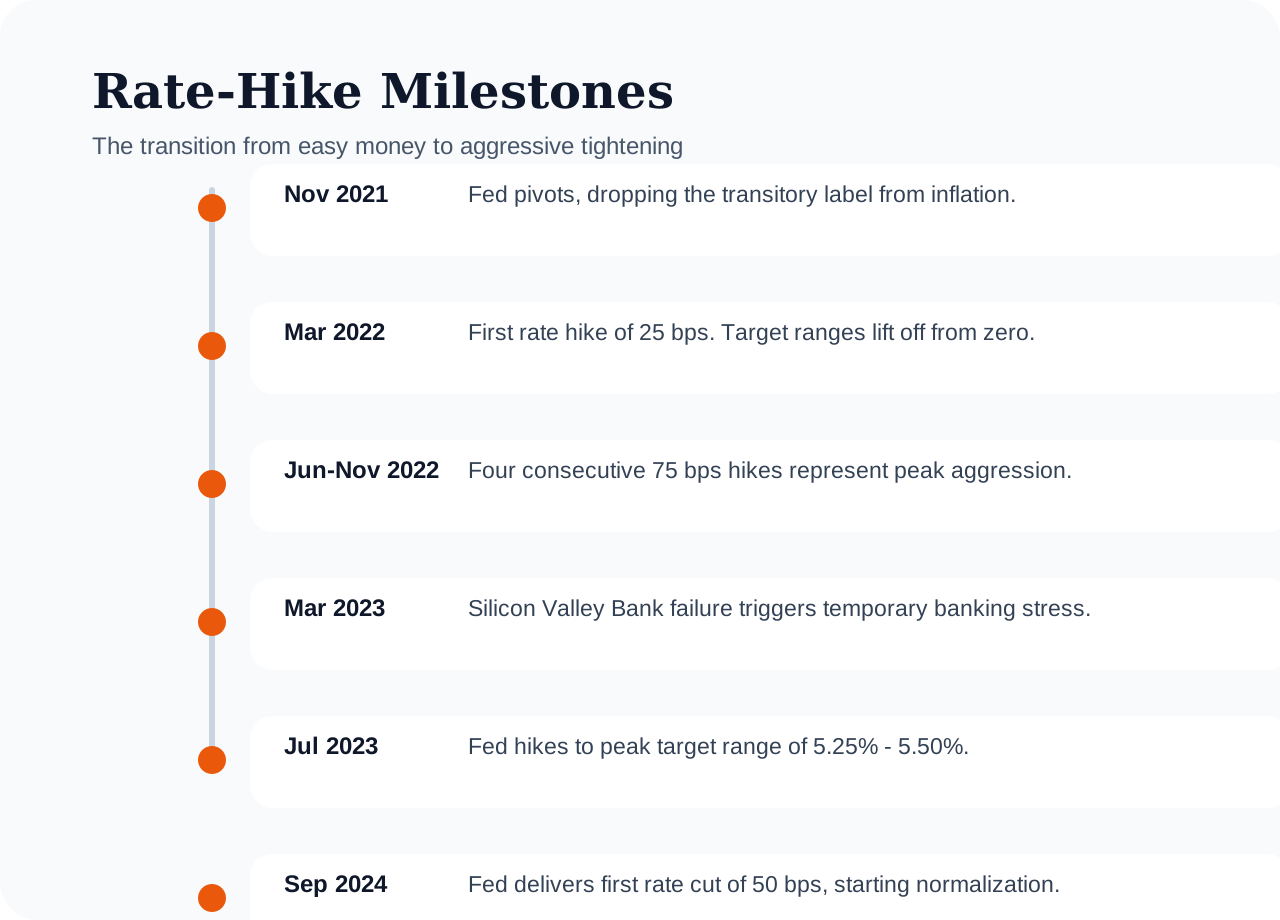
Visual
The timeline of the fastest rate-hiking cycle in recent history
From the initial pivot in late 2021 to peak rates and the eventual start of normalization in late 2024.
By the time the Fed reached its terminal rate of 5.25% - 5.50% in July 2023, it had raised rates by 525 basis points in just 16 months. This rapid contraction of liquidity had an immediate effect across the yield curve. The front end repriced sharply, while long-duration bonds suffered some of their deepest peak-to-trough losses in history.
Policy Transmission and Banking Mismatches
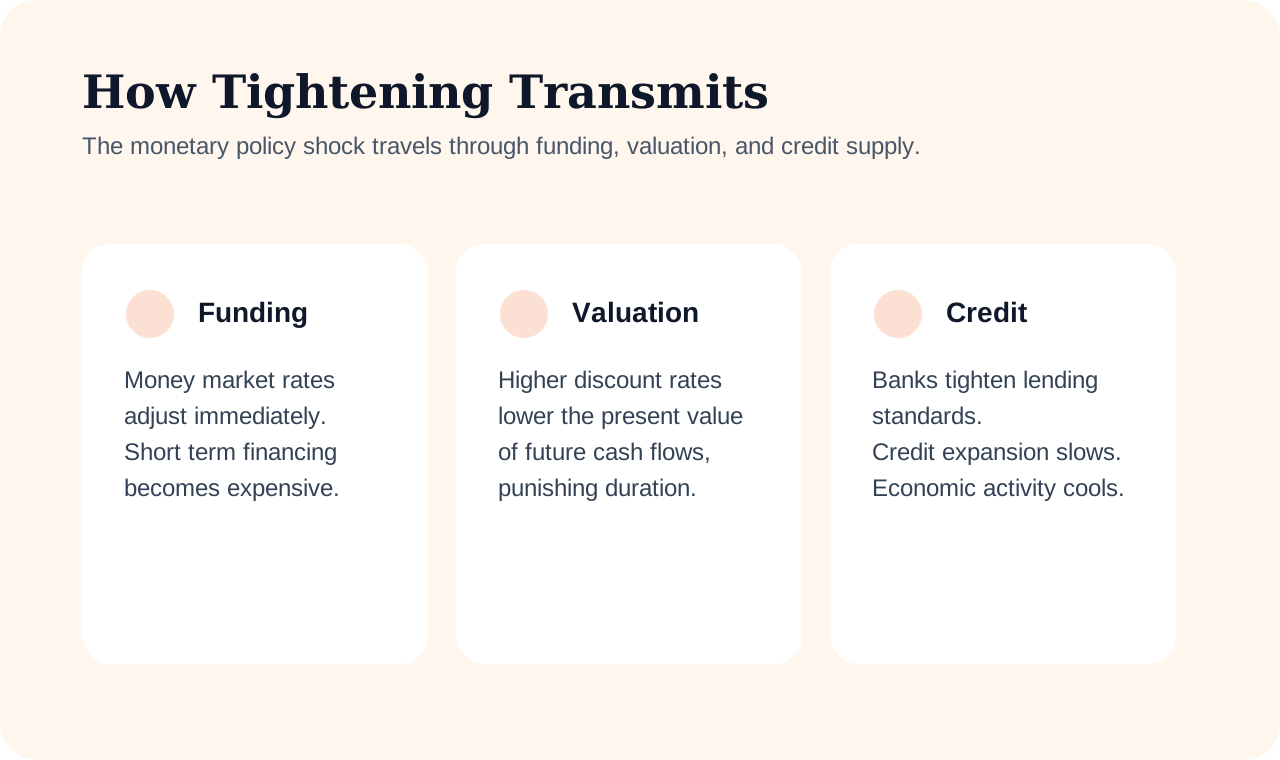
Monetary policy does not act in a vacuum; it transmits through money markets, banking systems, and valuation frameworks. As the policy rate rose, the cost of funds rose across the economy.
Visual
The three primary transmission channels of monetary tightening
How policy changes travel through the financial system to influence economic activity.
The sudden shift in rates exposed hidden vulnerabilities. The most notable was the failure of Silicon Valley Bank (SVB) in March 2023. During the low-yield era, SVB had invested heavily in long-duration, fixed-rate held-to-maturity (HTM) securities. As rates surged, these portfolios suffered massive unrealized losses. When deposit withdrawals forced the bank to liquidate those securities, the paper losses became real solvency failures. This highlighted that duration risk in a banking portfolio is fundamentally a liquidity risk when funding is flighty.
The Inverted Yield Curve and Easing Cycles
A hallmark of this tightening cycle was the deep and prolonged inversion of the yield curve. The spread between 2-year and 10-year US Treasuries inverted to its lowest level since the early 1980s. This inversion reflected the market's view that high current rates would eventually break economic momentum and force central banks to cut rates in the future.
Chart
Speed of Tightening: 2022 Cycle vs Historical Federal Reserve Cycles
The 2022 tightening cycle outpaced all major hiking cycles since the Volcker era in both speed and magnitude.
1994 Cycle2004 Cycle2015 Cycle2022 Cycle
X-axis: Months from Start of CycleY-axis: Cumulative Change in Rate (bps)
That view was vindicated in September 2024, when the Federal Reserve kicked off its easing cycle with a 50 basis point cut, acknowledging that inflation was moving toward the target and the labor market was cooling.
Key Takeaways for Fixed-Income Portfolios
This cycle reinforced several timeless fixed-income principles:
Cash is a Competitor: In a high-rate environment, short-term instruments offer genuine yield, reducing the incentive to take duration or credit risk.
Real Yields Matter: The return of positive real yields (nominal yields minus inflation) restores the structural diversification value of bonds.
Correlation Regimes Shift: When inflation is high, the traditional negative correlation between stocks and bonds breaks down, meaning both assets can fall together.
Table
US Macroeconomic Indicators During the Tightening Cycle
The trajectory of inflation and rates from the start of the hikes to the beginning of normalization.
Period
US CPI YoY (%)
Fed Funds Target (%)
10-Year Treasury (%)
2s10s Spread (bps)
March 2022 (Start)
8.5
0.25 - 0.50
2.34
4
June 2022 (Peak CPI)
9.1
1.50 - 1.75
3.02
6
March 2023 (SVB)
5.0
4.75 - 5.00
3.47
-58
July 2023 (Peak Stance)
3.2
5.25 - 5.50
3.97
-91
September 2024 (First Cut)
2.4
4.75 - 5.00
3.72
8
The 2022-2024 rate shock proved that structural assumptions about low inflation and permanent accommodation can change quickly. For fixed-income investors, the era serves as a stark reminder that duration and liquidity must always be managed in tandem.
A detailed analysis of the August 5, 2024 global market panic, exploring the mechanics of the yen carry trade, the Bank of Japan's rate hike, and the transmission channels of leverage.
A detailed case study of the 2022 UK gilt crisis, showing how leveraged LDI structures, collateral calls, and policy intervention interacted during one of the sharpest sovereign rate shocks in recent years.